
“By far the best investment you can make is in yourself.” — Warren Buffett
When you think about investing, what is the first thing that comes to mind? Most people often picture stocks, real estate, or new business ventures. But one of the most overlooked—and consistently high-return—investments is far more personal: the ability to communicate clearly and confidently.
Public speaking is not just a professional skill. It is a multiplier. It enhances how your ideas are perceived, how your value is recognized, and ultimately, how your career or business evolves over time.
Why Public Speaking Is a High-Return Skill
Strong communication is the center of nearly every opportunity. Whether you’re leading a team, pitching an idea, or building relationships, your ability to articulate thoughts effectively can shape outcomes. Even the first step – the job interview – you need the ability to express yourself and convince the person in front of you that you’re the best fit for the role.
So, it’s not just about an ambiguous skill that might help you a little. Investing in public speaking delivers returns in several ways.
1. Career Acceleration
Professionals who communicate effectively are more likely to be noticed, trusted, and promoted. Sharing your ideas confidently and purposefully immediately puts you in a higher regard for the next promotion than most people.
Clear speakers often become natural leaders, regardless of their formal role, because good communication fosters trust.
2. Increased Influence
Ideas alone rarely drive change—effective communication of ideas does. The more innovative your idea is, the more challenging it can be for your team to accept it. You need to present it in a way that makes it appealing. The goal isn’t just to have them think “That would be good,” but to make them believe “We need this.”
Public speaking allows you to persuade, inspire, and create alignment in more situations than just formal presentations.
3. Confidence Compounding
Confidence in speaking goes beyond the stage. It impacts meetings, negotiations, and everyday conversations, building a long-term cumulative effect.
Every person you encounter is drawn to confidence (not arrogance), which enhances all your interactions, even those that seem minor or insignificant.
The Cost of Not Investing
While the benefits are clear, the cost of avoiding public speaking development is often underestimated.
Missed opportunities, overlooked ideas, and under-recognized talent are common consequences. Many capable professionals struggle to get promoted, or even noticed, not because of lack of knowledge, but because they cannot express it with clarity and conviction.
In this sense, not investing in communication is itself a risk.
The Good News
Unlike many technical skills, public speaking improvement does not require years before results are visible. Even modest, consistent effort can produce noticeable changes:
- Better structure in your thinking
- Greater clarity in conversations
- Stronger presence in professional settings
The return on effort is disproportionately high. A few hours of focused practice can transform how you are perceived.
Modern Approaches to Learning Public Speaking
Traditionally, improving speaking skills required attending workshops, hiring coaches, or practicing in limited real-world settings. While effective, these approaches can be time-consuming and difficult to scale.
Today, digital tools are changing how individuals develop communication skills. Solutions that offer structured practice, feedback, and realistic simulations make it easier to build confidence consistently and on demand.
This shift allows professionals to integrate speaking practice into their routines—rather than treating it as a one-time event. It is an ongoing process of improvement that relies entirely on you.
A Smarter Way to Invest in Yourself
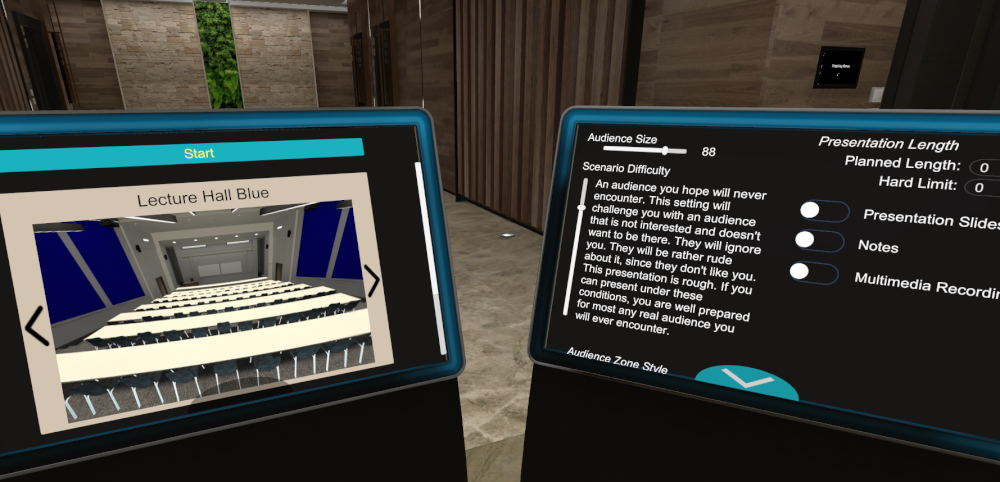
For those looking to develop public speaking in a practical, consistent way, tools like Virtual Orator provide a modern alternative.
By combining guided practice with realistic scenarios, our users refine their delivery, structure their ideas, and build confidence over time. Instead of waiting for high-stakes moments to practice, users can improve in a controlled, repeatable environment.
The result is not just better presentations—but better communication overall – without judgment or panic.
Final Thoughts
Investing in public speaking is not about becoming a perfect speaker. It is about becoming a clearer thinker, a stronger communicator, and a more confident professional.
As Warren Buffett suggests, the best investment is in yourself. Public speaking is one of the few skills where that investment continues to pay dividends across every area of your life.
And like any good investment, the earlier you start, the greater the return.

Cátia is a psychologist who is passionate about helping children develop and train social skills.
